Laser treatments for viral warts
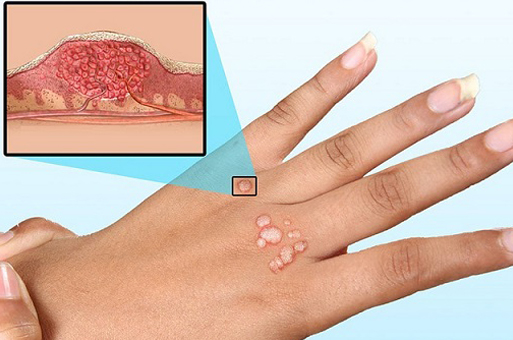
Your doctor will likely start with a few common treatments if you have warts. You'll receive medication that will cause your warts to fall off. Or they can use a really cold substance to completely freeze them. They may consider laser surgery if these therapies are unsuccessful.
A laser is a focused beam of light that is precise. Some lasers emit light that is strong enough to cut through metal. Lasers can be used to remove wrinkles, age spots, freckles, fine lines, and undesirable hair from the skin.
Pulsed-Dye Laser
The most common kind of laser for wart removal is this one. The wart's tiny blood vessels are destroyed when the wart's blood is heated up by the light. The wart dies and falls off without blood. The virus that produces the wart may also be harmed by the laser's heat.
Your skin may feel like a rubber band being snapped against by a laser. After the surgery, you won't have much pain. In 2-4 weeks, you ought to be fully recovered.
Laser therapy is effective for hard-to-reach areas, such as genital warts in the urethra, the tube that removes urine from the bladder.
Your doctor may prescribe medication to numb the region they will treat, depending on how many warts you have and where they are located. Alternatively, they might sedate you.
There are a few drawbacks to laser surgery:
There might be scars.
Tiny puffs of material that the laser zaps onto your skin have the potential to transfer bacteria, viruses, or fungi.
According to some medical professionals, there isn't enough data that laser surgery is more effective than alternative procedures, such as removing it via traditional surgery. However, lasers might be more effective at preventing warts from returning.
Other Laser Options
Carbon dioxide laser: This light is as useful as a well-bladed knife. If other treatments have failed and your warts are near your fingernails or toenails, it can be a viable option. Your doctor will first remove the top of the wart using a laser. The remainder will be burned away once they reduce the intensity of the light. The virus that gave rise to your warts could be among the debris it stirs up. With this procedure, you can get greater scarring than you would with a pulsed dye laser.
Yttrium/Aluminum/Garnet laser with erbium: Although the name is long, this type of laser can precisely heat a smaller region, resulting in less scarring. Researchers do not believe that the wart virus was propagated by the debris puffs from this particular laser.
Yttrium/Aluminum/Garnet laser with neodymium: The wart's blood vessels are the target of this laser's deeper beam. Paediatric Medical professionals use this laser to destroy papillomas, which resemble warts and can grow in the mouth or throat. The virus that causes warts also causes them.
After the Treatment
Doctors are unable to eradicate the wart-causing virus: As a result, they might return or appear somewhere else. Due in part to their tendency to form in wet areas, genital warts are more prone to come back.